

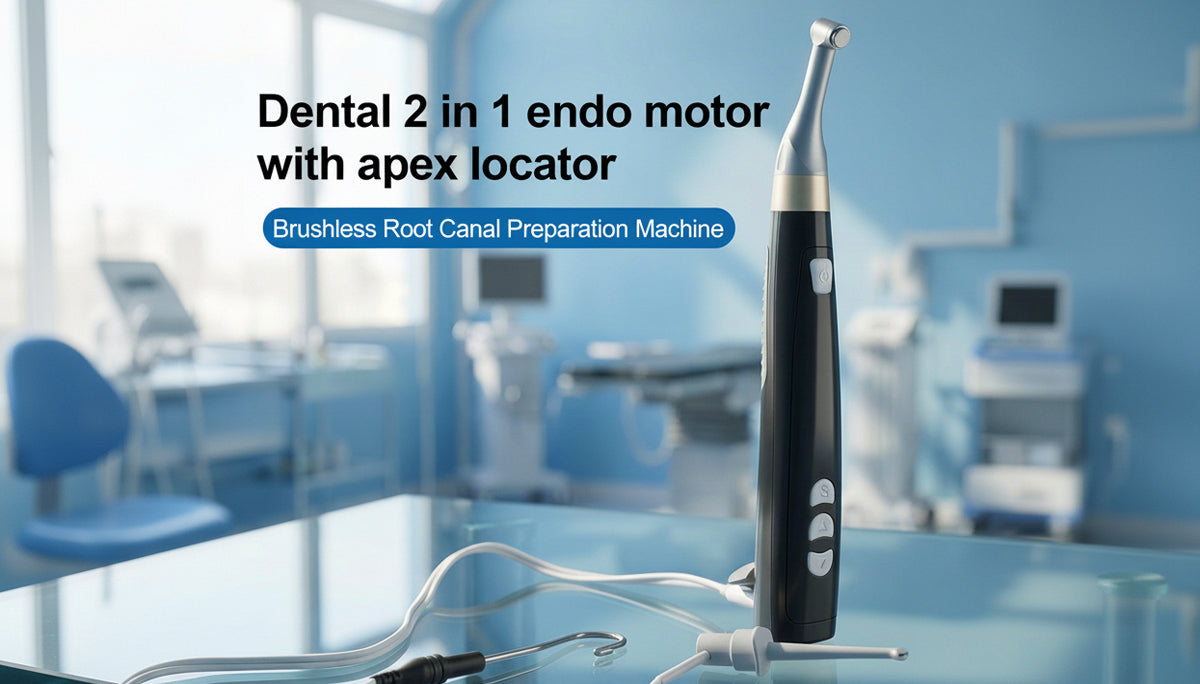
What is an Endo Motor?
An endomotor is a dental device used to operate rotary or reciprocating endodontic files during root canal treatment. Instead of relying only on manual hand files, dentists use an endomotor to shape and prepare the root canal in a more controlled manner. These motors significantly enhance the speed, accuracy, and convenience of root canal preparation, making procedures smoother for both the clinician and the patient.
How Does an Endo Motor Work?
Endo motors work by transmitting rotational motion to endodontic files, which are inserted into the root canal to remove infected tissue and shape the canal. The motor is connected to the file via a handpiece, which can be adjusted to control the speed and torque of the motor.
The dentist will typically begin by inserting a small file into the root canal, using the endo motor to rotate the file and remove debris. As the procedure progresses, the dentist will gradually increase the size of the file to ensure the entire root canal is cleaned and shaped.
What Is a Rotary Endo Motor?
When people talk about an endo motor, they are usually talking about a rotary endo motor. This is the most common type. As the name suggests, a rotary endo motor uses continuous rotation. This means the endodontic file spins in a full circle, like a drill, but much, much slower. This steady, smooth motion is very good at cleaning and shaping the root canal.
The continuous rotary movement allows the dentist to clean the canal to remove infected tissue quickly and smoothly. The special files used with these motors, called rotary files, are very flexible. They can follow the curves of a root canal without causing damage. This is one of the biggest advantages over traditional manual instrumentation.
Using a rotary system is now the standard for most endodontic treatments. It makes the procedure more predictable. The dentist has better control over the instrumentation. The result is a clean, well-shaped canal that is ready for filling. This leads to a higher success rate for the root canal procedure. For any dental practice doing endodontic work, having a reliable rotary endo motor is a must. It simply makes the job better for everyone, the dentist and the patient.
What Are Reciprocating Endo Motors?
While rotary motors are very popular, there's another type you should know about: reciprocating endo motors. Instead of spinning in a full circle, the file in a reciprocating endo motor moves back and forth. It turns a large angle in the cutting direction and then a smaller angle in the opposite direction. This movement is designed to reciprocate.
Why use this back-and-forth motion? The main reason is to reduce stress on the file. When a file spins continuously, it can build up stress, especially in a curved canal. This can lead to the file breaking. The reciprocating motion helps to release this stress. The file "cuts" on the forward motion and "disengages" on the backward motion. This makes it less likely to get stuck or break. It’s a clever way to improve safety during a root canal.
Many dentists love reciprocating endo motors because they often use just one file to shape the entire canal. This can save time and money. The motion is also very effective at moving debris out of the canal. Some of the best endo motors on the market today offer both rotary and reciprocating modes. This gives the dentist the flexibility to choose the best motion for each specific case. The ability to reciprocate is a key feature to look for.
Should I Consider a Brushless Endo Motor?
When you start looking at different models, you might see the term "brushless endo motor". A brushless motor is a newer and better type of micro motor. Older motors used small carbon brushes to work. These brushes would wear out over time. They also created more heat and noise.
A brushless endo motor does not have these brushes. This makes it much more durable and reliable. It lasts longer and needs less maintenance. I’ve noticed they are also much quieter and smoother to operate. This creates a better experience for both the dentist and the patient. It also means the motor can deliver more power despite being lightweight. The higher ratio means the motor can deliver more power and precision.
The main benefit is performance. A brushless endo motor provides very stable speed and torque. The power does not fade as the battery gets low. This consistency is very important during a delicate endodontic procedure. They also tend to have a prolonged battery life and reducing the need for constant charging. While a brushless endo motor might cost a little more. The long life and better performance make it worth the price for any serious dental practice.
Why Is Torque Control So Important in Endodontic Motors?
One of the most important features of any endo motor is torque control. But what is torque? In simple terms, torque is the rotational force of the motor. It’s the "push" that the motor gives to the file as it turns. Having control over this force is a crucial factor for a safe and successful root canal. If the force is too high, the file can break. If it's too low, it won't clean the canal properly.
Modern endodontic motors have amazing torque control. A dentist can set the exact amount of torque needed for a specific file or a specific canal. When the file feels too much resistance inside the tooth, the endo motor can automatically stop or even reverse its rotation. This "auto-reverse" feature is a lifesaver. It prevents the file from getting stuck and breaking. This protects the patient and makes the root canal treatment much safer. The ability of the torque allows the endo motor to handle difficult situations.
Think about cleaning a very narrow or curved root canal. This is where high torque and precise control are most needed. The increased torque allows the endo motor to work effectively even in these tough spots. Without good torque control, the dentist would have a much harder time. The motor constantly checks the force. This smart technology gives the dentist the confidence to work on even the most complex cases. So, when you look at an endo motor, always check its torque settings and safety features.
Why Speed Control Is Important?
Different rotary file systems require different speed settings. Using the correct speed helps improve cutting efficiency and file control.
A good endomotor allows dentists to select the speed based on the file system and clinical need. This improves workflow and helps maintain consistency during canal preparation.
Speed control is particularly useful for dentists who perform root canal treatments regularly and want a more standardized endodontic workflow.
How Does an Apex Locator Feature Help?
One of the coolest features you can find in a modern endo motor is an integrated apex locator. This is a game-changer. The apex is the very tip of the tooth's root. During a root canal, it is very important for the dentist to know exactly where this tip is. If they clean past the apex, it can cause pain and problems. If they don't clean all the way to the apex, they might leave some infection behind.
An apex locator is a device that helps the dentist find the apex electronically. It sends a very small, safe electrical current through the file. When the file tip reaches the apex, the device beeps or shows a signal on a screen. In the past, dentists had to take many X-rays to check the file's position. This took time and exposed the patient to more radiation. The apex locator makes this process faster and much more accurate.
Having a motor and apex locator in one device is incredibly convenient. The endo motor can be set to automatically stop or reverse when the file reaches the apex. This ensures a safer procedure. It prevents the dentist from accidentally going too far. This feature is especially helpful in canals with tricky shapes. It gives the dentist real-time feedback, allowing them to work with more confidence and precision.
What Should I Look for When Choosing the Best Endo Motor?
Wireless or Pedal Operation
When selecting an endo motor, consider whether you prefer a wireless model or one controlled via a foot pedal. Some endo motors are entirely handpiece-controlled for convenience, while others use a pedal for precise speed and torque adjustments.
Program Availability
Many endo motors come with pre-installed file sequences for their brand-specific systems. For optimal performance, it’s ideal to select a motor compatible with the file system you plan to use, ensuring smooth, efficient treatment.
Speed and Torque Control
Effective endodontic motor use depends on precise control over speed and torque. Typical speeds range from 150–650 rpm, but faster speeds can improve cutting efficiency. High torque ensures effective instrumentation, while modern low-torque systems reduce stress on files and teeth. The best endodontic motors offer versatility, allowing use with multiple file systems and adjustable torque settings to match the procedure, patient anatomy, and clinical preference.
Ergonomics
The dentist will be holding this tool for long periods. You want an endo motor that is comfortable and well-balanced. Look for a lightweight handpiece with a small head. A smaller head gives the dentist a better view of the tooth they are working on. It’s a small detail that makes a big difference. When selecting the right endo motor, try to hold it if you can.
Considering these factors helps clinics choose the right endo motor for safe, efficient, and predictable root canal treatments, improving both operator comfort and patient outcomes.
How to Maintain Your Endo Motor?
Proper maintenance of your endodontic motor ensures long-lasting performance, safety, and consistent results during root canal procedures. Follow these essential care tips:
Clean After Each Use: Gently wipe the motor and handpiece with a soft cloth to remove dust, debris, and moisture. This prevents buildup that could affect performance.
Use Approved Cleaning Solutions: Avoid harsh chemicals. Always clean the device with solutions recommended by the manufacturer to prevent corrosion or damage.
Oiling (if required): Some motors need periodic oiling to keep internal components moving smoothly. Follow the user manual for proper instructions.
Proper Storage: Store the motor in a clean, dry area, away from direct sunlight, heat, or water.
Check Cables and Connections: Ensure cables are not twisted, frayed, or damaged. Faulty wires can impair motor function.
Handle with Care: Dropping or mishandling the motor can damage internal components, affecting performance.
Each endo motor is unique, so always read and follow the manufacturer’s maintenance guidelines. Regular care extends the life of your motor, ensures smooth operation, and supports safe, precise endodontic treatments in your clinic.
Why is a Good Endo Motor a Smart Investment for My Dental Clinic?
A good endo motor can completely change how you do endodontic work. It makes root canal procedures faster. This means you can see more patients or spend more time on other treatments. Time is money in any dental clinic.
Efficiency is just one part of it. A quality endo motor also improves the quality of your work. The precision and control you get leads to better outcomes for patients. This means fewer complications and happier patients. A happy patient is more likely to return and recommend your practice to others. The use of a modern dental endodontic tool like an endo motor shows patients that you are committed to giving them the best care.
Finally, a good endo motor makes the job less stressful for the dentist. Cleaning a canal by hand is physically demanding. Using an endo motor reduces hand fatigue and makes the procedure more comfortable to perform. The safety features, like torque control and an integrated apex locator, also reduce the mental stress of worrying about file breakage. When you choose an endo motor, you are investing in efficiency, quality, and your own well-being. That's what makes it one of the smartest investments a practice can make.
Over a decade of experience make AZDENT a well-known supplier of endodontic instruments. We offer a range of innovative endo motor for dentists.
If you have any needs, feel free to contact us now!